43 จำนวนผู้เข้าชม |
28/04/2026
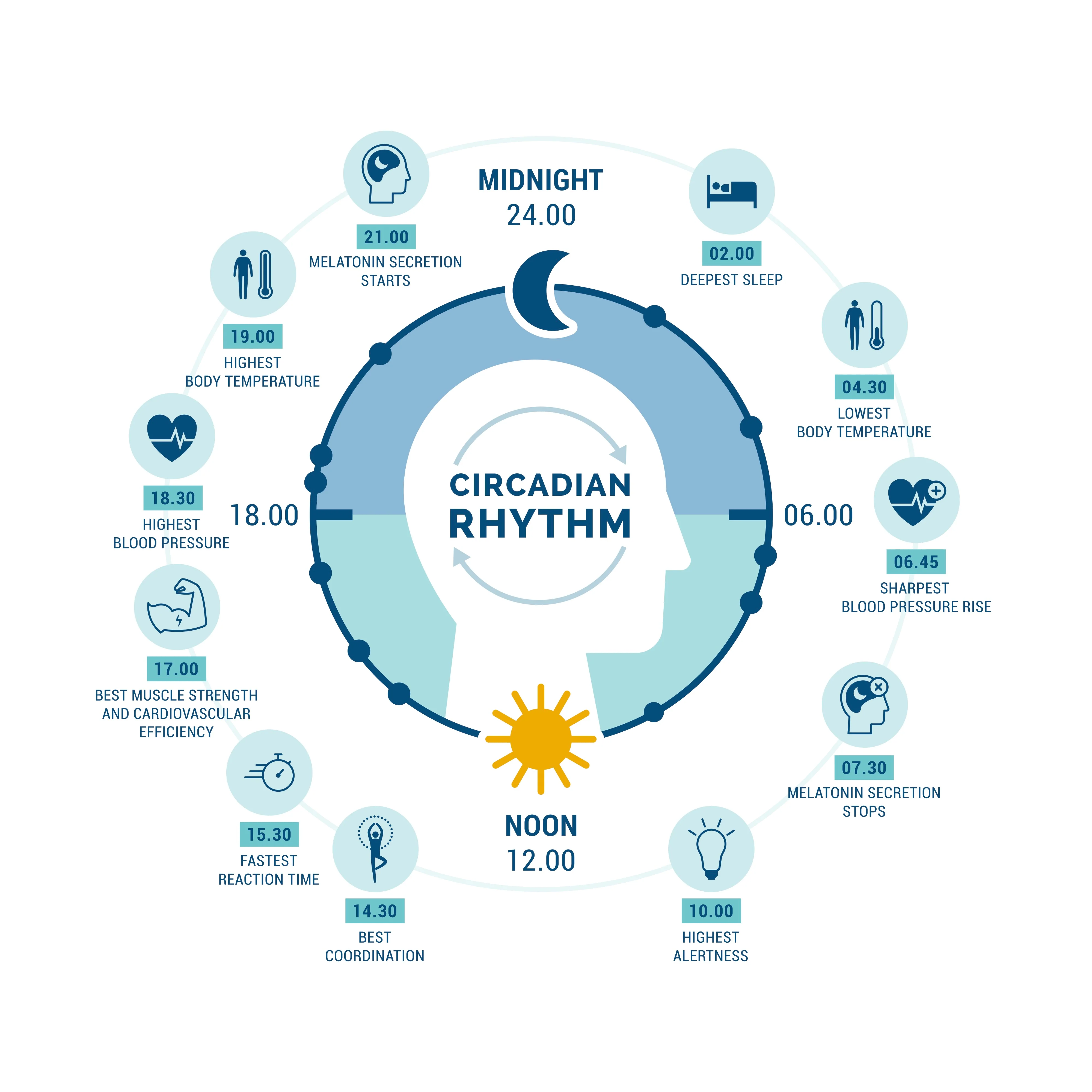
Social Jetlag is a term used to describe the mismatch between your body's internal clock (your circadian rhythm) and social schedules. On weekdays, we force ourselves to wake up early for work or school. On weekends, we stay up late and sleep in to "catch up" on lost sleep. This three-hour shift in sleep timing is biologically equivalent to traveling across several time zones and back every single week.
Research suggests that over 70% of adults experience at least one hour of social jetlag weekly, with 30–50% experiencing two hours or more. Among adolescents, the numbers are even more striking. More than 80% of teenagers between ages 12 and 17 show some degree of social jetlag because their biology pushes them toward later sleep times while school schedules demand early mornings.
Social jetlag is chronic and recurring. Research suggests that chronic social jetlag can lead to several health issues:
Social jetlag isn't just about feeling tired on Monday. It's a chronic form of circadian disruption with real consequences. While sleeping in on Saturday feels like a luxury, your body prefers consistency over quantity.
By aligning your social life with your biological needs, you'll find yourself with more energy, a sharper mind, and a much happier Monday morning.
Prepared by: ภญ. ปุณยนุช อังคะนาวิน
Source: AASM – Social Jet Lag is Associated with Worse Mood, Poorer Health, and Heart Disease, Sleep Cycle – Social Jetlag
© 2026 Siammerx Co., Ltd
 TH
TH EN
EN CN
CN JAP
JAP AR
AR