35 จำนวนผู้เข้าชม |
17/06/2026
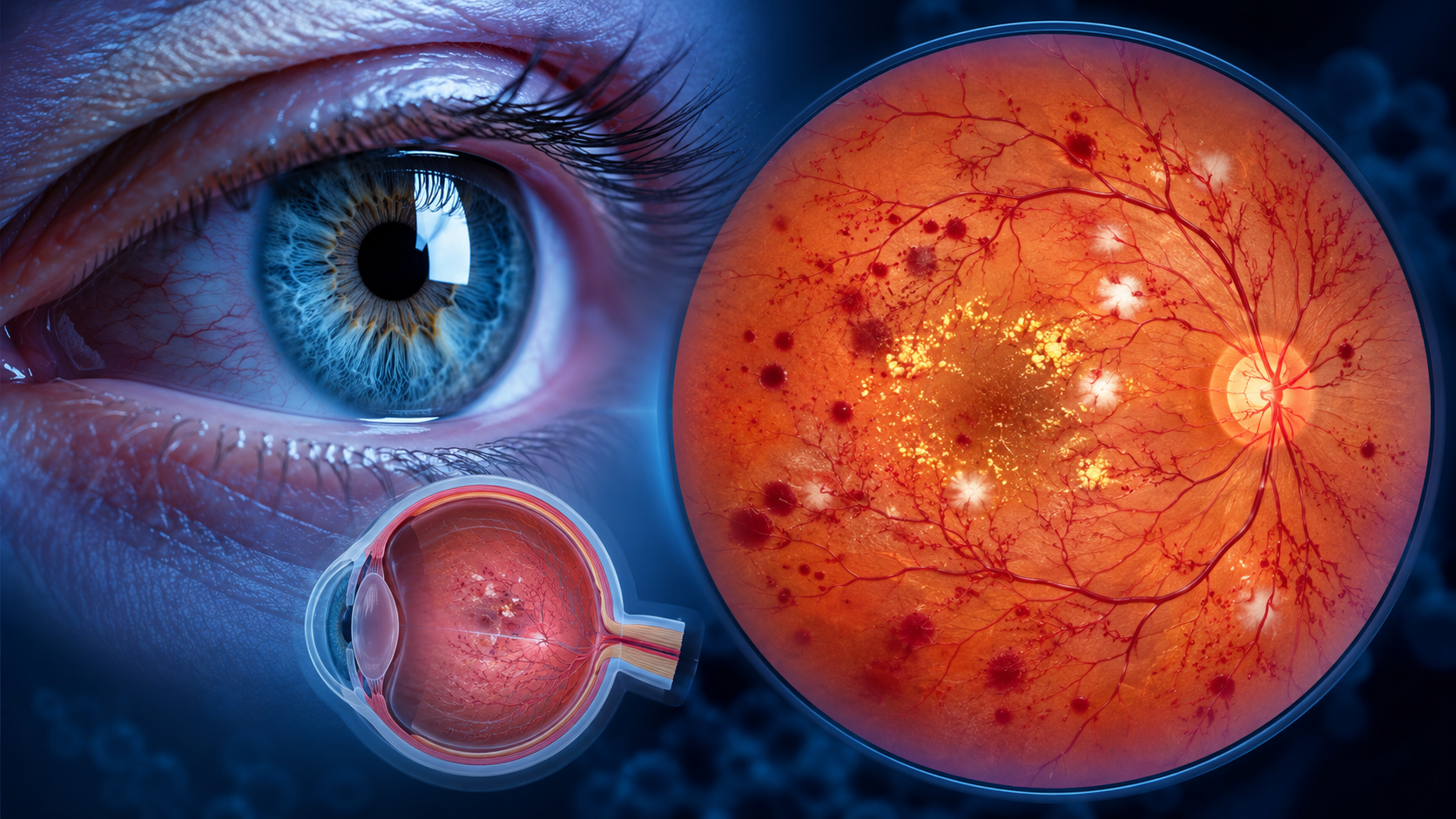
Diabetic retinopathy is one of the most common complications of diabetes and one of the leading causes of blindness in working age adults. What makes it especially dangerous is that in its early stages, it often causes no symptoms at all. By the time vision changes are noticeable, meaningful damage may have already occurred.
Diabetic retinopathy is damage to the blood vessels of the retina, the light sensitive tissue at the back of the eye that converts light into the signals your brain interprets as images.
Consistently high blood sugar levels damage these small blood vessels over time. They may weaken, leak fluid or blood, or become blocked entirely. In more advanced stages, the eye responds by growing new, abnormal blood vessels that are fragile and prone to bleeding, a process that can lead to severe vision loss if untreated.
Diabetic retinopathy generally progresses through stages.
In the early stage, known as nonproliferative diabetic retinopathy, blood vessels in the retina weaken and may bulge slightly, sometimes leaking small amounts of fluid or blood. Vision is often unaffected at this point.
As the condition progresses, blood vessel damage increases and blood flow to parts of the retina may be reduced. The retina responds by signaling for new blood vessel growth.
In the advanced stage, known as proliferative diabetic retinopathy, these new blood vessels grow abnormally on the surface of the retina. They are fragile and can bleed into the eye, and scar tissue can form, potentially pulling on the retina and causing it to detach.
A related condition, diabetic macular edema, can occur at any stage. This involves swelling in the macula, the part of the retina responsible for sharp, central vision, and is a common cause of vision loss in people with diabetes.
Early diabetic retinopathy often has no symptoms. As it progresses, signs may include blurred or fluctuating vision, dark spots or strings floating in your field of vision, often called floaters, impaired color vision, and patches or areas of vision loss. In advanced cases, sudden vision loss can occur.
Because symptoms can be absent in the early and most treatable stages, regular eye exams are critical even when vision seems normal.
Several factors increase the likelihood of developing diabetic retinopathy. Duration of diabetes is significant, as the longer someone has diabetes, the higher the risk. Poor blood sugar control over time is strongly linked to the development and progression of the condition. High blood pressure and high cholesterol can also contribute to blood vessel damage in the retina. Pregnancy can temporarily increase risk or worsen existing retinopathy, and certain populations have a higher prevalence of diabetes related eye complications.
The encouraging news is that diabetic retinopathy is highly manageable, especially when caught early.
Managing blood sugar levels consistently over time is one of the most effective ways to reduce risk and slow progression. Controlling blood pressure and cholesterol also helps protect the small blood vessels throughout the body, including those in the eyes.
Annual dilated eye exams allow an eye care professional to detect changes in the retina before they affect vision, often years before symptoms appear. If retinopathy is detected, treatment options may include laser therapy to seal leaking blood vessels or reduce abnormal vessel growth, injections of medication into the eye to reduce swelling and abnormal vessel growth, and in advanced cases, surgery to remove blood or scar tissue from the eye.
Lifestyle factors that support overall vascular health, such as not smoking, regular physical activity, and a balanced diet, also play a supporting role.
Diabetic retinopathy develops quietly, often without any warning signs until vision is already affected. For anyone living with diabetes, regular eye exams are not optional extras. They are one of the most effective tools available for preserving long term vision.
The earlier changes are detected, the more treatment options remain available and the better the outcomes tend to be. Vision lost to advanced diabetic retinopathy is often permanent, but vision lost to a missed eye exam is entirely preventable.
จัดทำโดย: ภญ ปุณยนุช อังคะนาวิน
© 2026 Siammerx Co., Ltd
 TH
TH EN
EN CN
CN JAP
JAP AR
AR