What Is Osteoporosis?
What Is Osteoporosis?
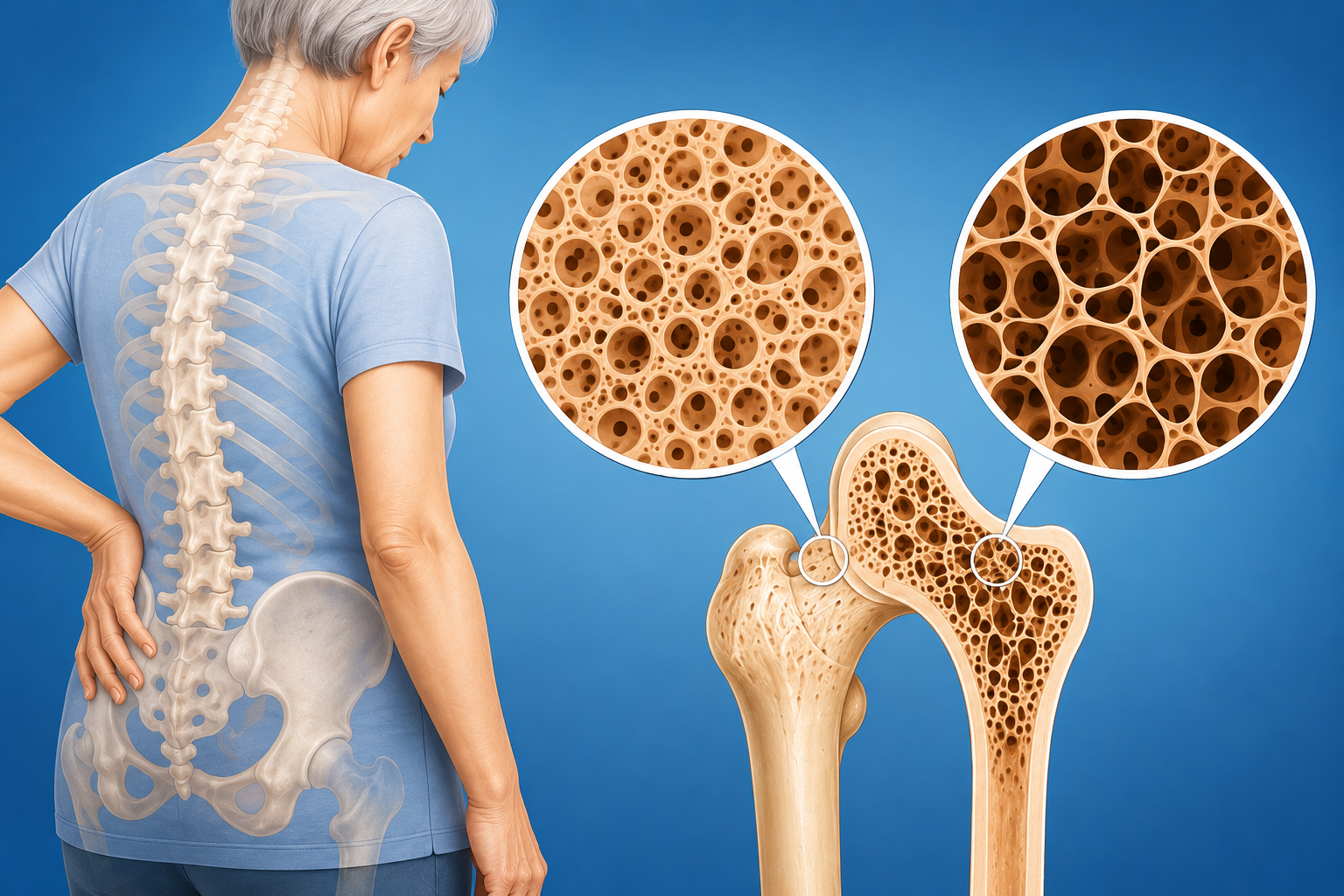
Osteoporosis is a condition in which bone density and bone mass decrease, resulting in deterioration of the internal bone structure. Bones become fragile and are more likely to break, even from minor impacts such as falls, lifting objects, or low-impact accidents.
Osteoporosis often does not cause noticeable symptoms in its early stages. Many people may only discover they have osteoporosis after experiencing a bone fracture. For this reason, it is often referred to as a "silent disease" that can affect long-term bone health.
Causes of Osteoporosis
Osteoporosis can generally be divided into two main types:
- Primary Osteoporosis — This is the most common type and occurs as part of the natural aging process.
- Postmenopausal Women: A decline in estrogen levels after menopause may increase bone breakdown and contribute to a reduction in bone mass.
- Older Adults: As people age, the body produces new bone more slowly, which can gradually lead to bone loss.
- Secondary Osteoporosis — This type results from external factors or underlying medical conditions and can occur in individuals of any age. Contributing factors may include:
- Long-term use of certain medications, especially corticosteroids
- Medical conditions such as diabetes, thyroid disorders, rheumatoid arthritis, liver disease, and chronic kidney disease
- Lifestyle factors such as inadequate calcium intake, vitamin D deficiency, smoking, excessive alcohol consumption, and physical inactivity
Risk Factors for Osteoporosis
Although osteoporosis is more common among older adults, it can develop due to a variety of factors, including both non-modifiable and lifestyle-related risks.
Non-Modifiable Risk Factors
- Age: As people age, particularly after the age of 50, bone breakdown tends to occur faster than new bone formation, resulting in progressive bone loss.
- Sex: Women are at a higher risk of osteoporosis than men, especially after menopause due to a rapid decline in estrogen levels. In men, the risk may increase when testosterone levels are low.
- Genetics: Individuals with a parent or close relative who has experienced a hip fracture related to osteoporosis may have a higher risk.
Lifestyle and Nutritional Risk Factors
- Long-term deficiencies in calcium and vitamin D may affect bone strength and increase the risk of osteoporosis.
- Consuming excessive sodium, caffeine, or alcohol may negatively affect bone health.
- Smoking may interfere with bone formation and reduce the body's ability to absorb calcium.
- Lack of exercise or insufficient weight-bearing activity may accelerate bone loss.
- Limited exposure to sunlight may reduce the body's ability to produce adequate vitamin D.
Medical Risk Factors
- Long-term use of corticosteroids may increase bone breakdown and reduce new bone formation.
- Underlying medical conditions such as diabetes, hyperthyroidism, parathyroid disorders, rheumatoid arthritis, chronic liver disease, chronic kidney disease, and gastrointestinal disorders that affect nutrient absorption.
- Surgical removal of both ovaries before menopause may increase osteoporosis risk due to reduced estrogen production.
Symptoms of Osteoporosis
Osteoporosis is often called a "silent disease" because it usually develops without noticeable symptoms in its early stages. However, possible signs and symptoms may include:
- Fragility Fractures: Bones may fracture from minor impacts such as a light fall, coughing, sneezing, or bending over. Common fracture sites include the wrist, hip, spine, and upper arm near the shoulder.
- Loss of Height: Individuals may lose approximately 2–4 centimeters or more in height compared with their previous adult height.
- Stooped Posture or Changes in Body Shape: Compression of the vertebrae may result in a hunched back, stooped posture, or noticeable changes in body shape.
- Back Pain: Chronic or sudden back pain may occur due to spinal fractures or vertebral compression.
Important Note: Many individuals with osteoporosis-related spinal fractures or vertebral compression may not experience significant pain. If you notice a decrease in height or the development of a stooped posture, further medical evaluation may be appropriate.
Foods That Support Bone Health
Maintaining bone health should include foods rich in calcium and vitamin D, such as milk, yogurt, cheese, salmon, and sardines, which may help support healthy bones. Other minerals important for bone health include magnesium, potassium, and fluoride.
Recommended Daily Calcium Intake
| Age Group |
Recommended Calcium Intake |
| 20–50 years |
800 mg/day |
| 51 years and older |
1,000 mg/day |
| Adolescents (10–19 years) |
1,200 mg/day |
| Pregnant and breastfeeding women |
1,200 mg/day |
How to Prevent Osteoporosis
Osteoporosis prevention should begin early in life. Preventive measures may include:
- Consuming adequate calcium and vitamin D
- Exercising regularly
- Getting mild morning sunlight exposure for approximately 10–15 minutes per day
- Avoiding smoking
- Limiting alcohol consumption
- Maintaining a healthy body weight
- Undergoing bone density screening when risk factors are present
Summary
Osteoporosis is a condition characterized by reduced bone mass and bone density, resulting in fragile bones that are more susceptible to fractures. Although it may not cause symptoms in its early stages, consuming adequate calcium and vitamin D, engaging in regular physical activity, and undergoing bone density testing when appropriate may help reduce risk and support long-term bone health.
Prepared by: Asst. Prof. Dr. Pharadon Wongwikyakan
References:
, Bangkok Hospital,
, KDMS Hospital,
, Praram 9 Hospital,
, Nonthavej Hospital
 TH
TH EN
EN CN
CN JAP
JAP AR
AR