66 จำนวนผู้เข้าชม |
21/05/2026
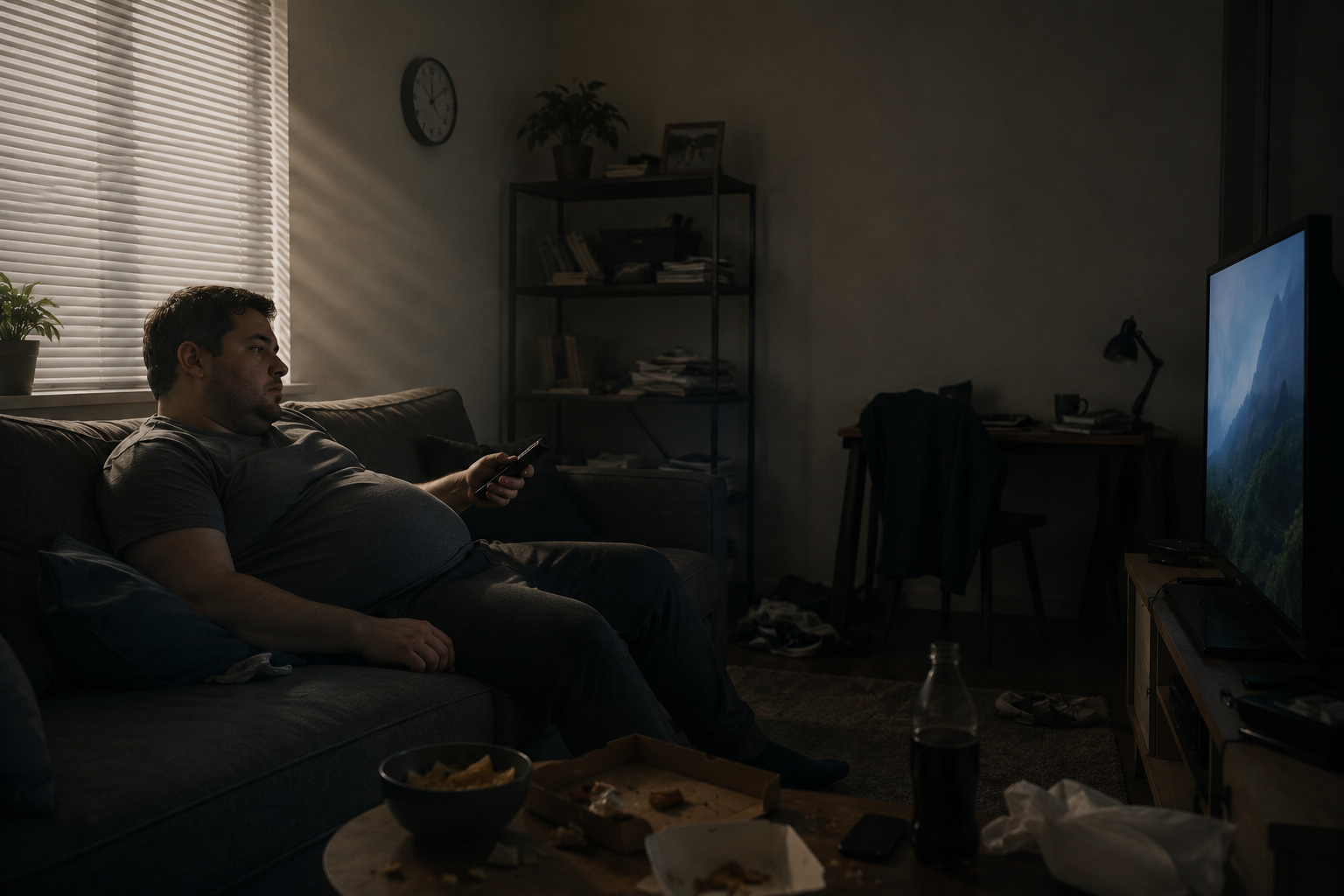
You wake up. You sit in the car. You sit at your desk for eight hours. You sit on the couch to decompress. Then you go to bed and do it all again tomorrow. For millions of people, this is just a normal Tuesday. And it's quietly doing serious damage. A sedentary lifestyle — spending the majority of your waking hours physically inactive — has become one of the most underestimated health crises of the modern age.
The numbers are hard to ignore. The World Health Organization estimates that physical inactivity is responsible for approximately 3.2 million deaths per year globally, making it the fourth leading risk factor for mortality worldwide. But it's not just about dying early. Prolonged sitting, even in people who exercise regularly, has been independently linked to a cluster of serious conditions:
Here's the uncomfortable truth: one hour of exercise cannot undo ten hours of sitting. Research published in the Annals of Internal Medicine found that even among people who met weekly physical activity guidelines, those who sat for long uninterrupted periods still showed significantly worse health outcomes than those who broke up their sitting throughout the day. It turns out that movement needs to be distributed, not stockpiled.
We didn't design our lives to be sedentary — the economy did it for us. The shift from physical labor to knowledge work, the rise of screen-based entertainment, food delivery at the tap of an app, and remote work collapsing the one activity that forced us to move (the commute) have all quietly eliminated the incidental movement that kept previous generations healthier.
The good news: you don't need to run a marathon. Research consistently shows that even modest increases in movement produce meaningful health benefits.
The danger of a sedentary lifestyle isn't dramatic. It doesn't announce itself. It accumulates quietly in stiff joints, creeping weight, low energy, and a heart that's working harder than it should.
Your body was built to move. Every hour you give it the chance to do what it was designed for is an investment that compounds over a lifetime. Start with five minutes. Then another five. The chair will still be there — but ideally, you won't be in it quite as much.
Prepared by: ภญ.ปุณยนุช อังคะนาวิน
Source: National Center for Biotechnology Information, University of New Mexico – Sedentary Lifestyle
© 2026 Siammerx Co., Ltd
 TH
TH EN
EN CN
CN JAP
JAP AR
AR